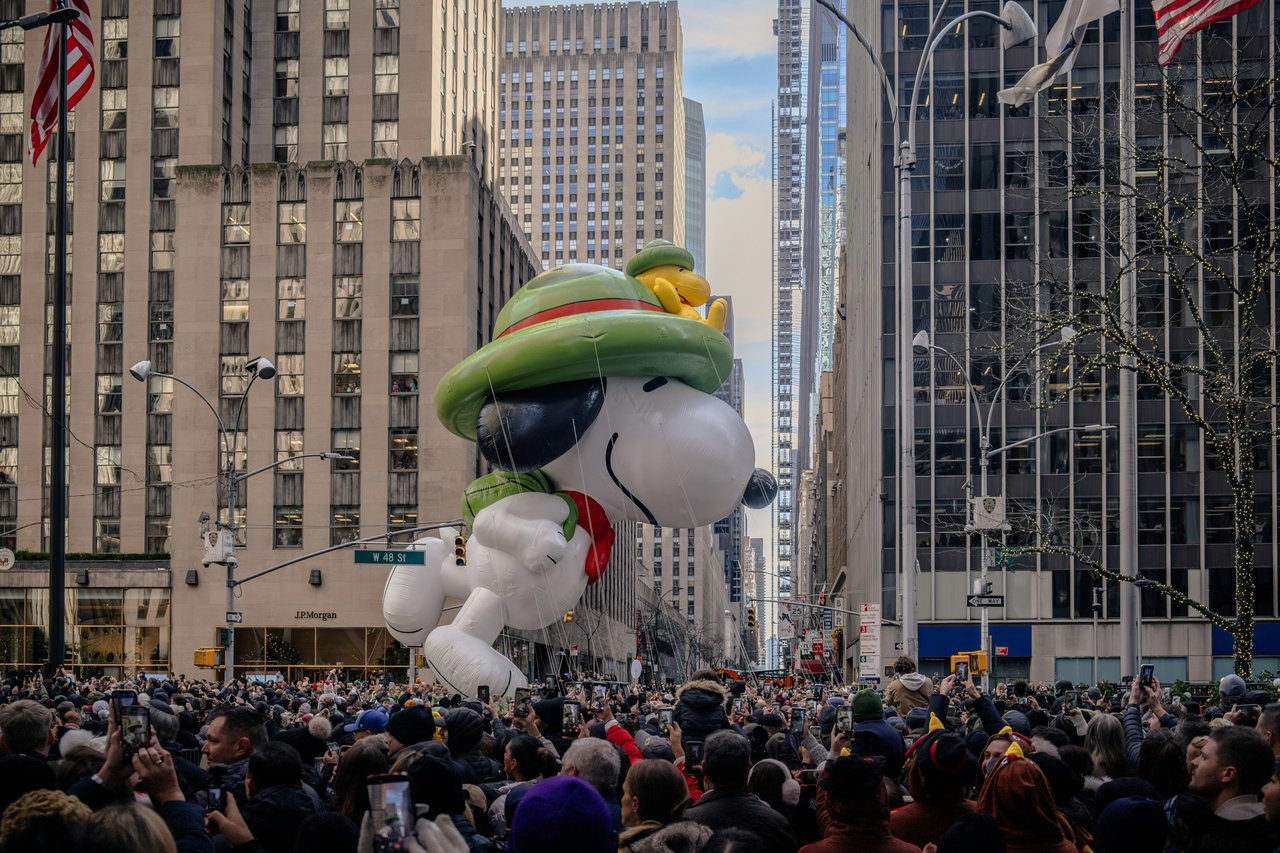
Macy’s Thanksgiving Parade is more than just a parade—it’s the official moment New York City transforms into a holiday wonderland! Millions line the streets to see the iconic floats, Broadway performances, and massive balloons, marking the start of Thanksgiving weekend. Swipe through for insider secrets about this unforgettable, a century old tradition.
It Didn’t Start With Balloons
The parade debuted in 1924, but it was originally called the "Macy's Christmas Parade." It featured clowns, bands, and live animals borrowed from the Central Park Zoo! The famous giant rubber balloons didn't make their first appearance until 1927, replacing the animals.
The Night Before the Big Show
For many New Yorkers, the real fun happens the day before Thanksgiving. Thousands gather near the American Museum of Natural History to watch the massive helium balloons inflate. It's a surreal, behind-the-scenes spectacle that brings the giants to life before they take to the streets.
Balloons Used to Fly Away
For a period in the 1920s and 30s, Macy's used to simply release the balloons into the sky at the end of the parade. Each one had an address label and a reward for whoever found it and mailed it back! This tradition ended after a few dangerous incidents.
A Brief Hiatus for the War
The parade was canceled for three years during World War II, from 1942 to 1944. Due to rubber and helium shortages, the balloons were actually deflated, chopped up, and donated to the U.S. government for the war effort!
90 People Per Balloon!
Steering the massive character balloons is a serious job. The largest balloons, like Snoopy or SpongeBob, can require up to 90 handlers each! These volunteers are trained and carefully coordinated to navigate the skyscrapers and wind tunnels of Manhattan.
The Start of the Holidays
The parade culminates with the arrival of Santa Claus in Herald Square, marking the official kickoff of the Christmas season in NYC.
Which famous balloon or performance is your favorite memory from the Macy's Thanksgiving Day Parade?
Let us know in the comments!
Source: Scholastic